
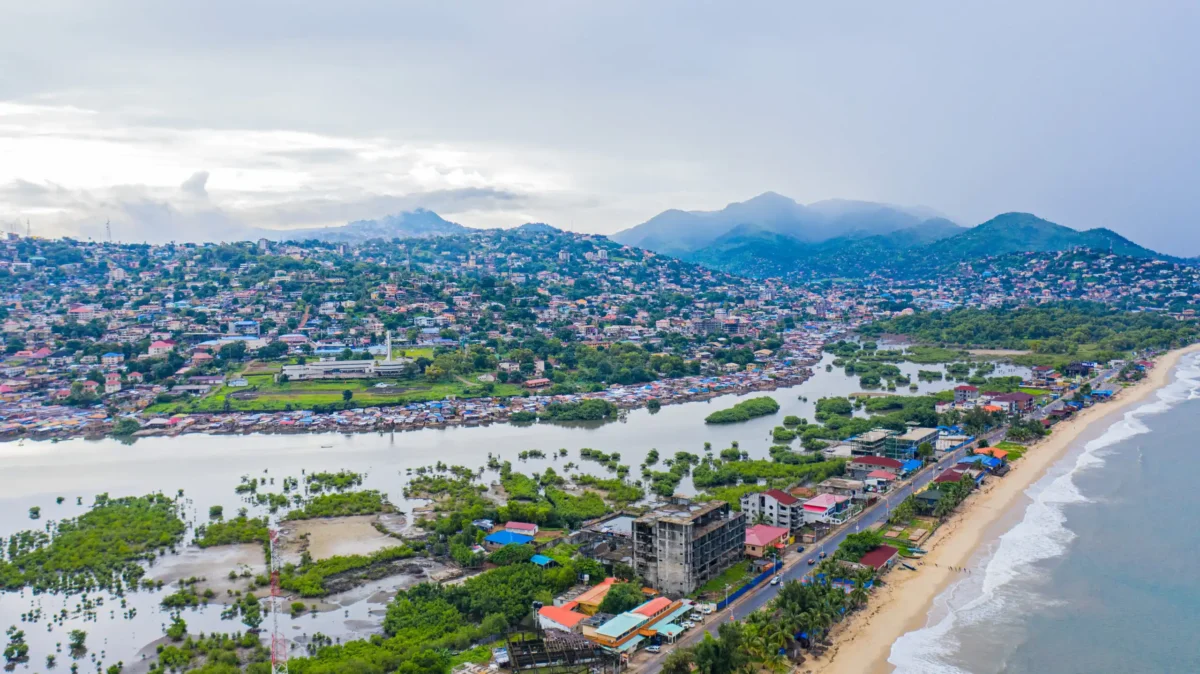
Bordered by Guinea and Liberia, Sierra Leone is a West African country blessed with natural beauty and rich resources, particularly diamonds and gold. Yet despite this wealth, poverty remains widespread: more than 60% of the population survives on less than $1.25 a day. Of its six million citizens, about three‑quarters identify as Muslim, though this number has declined over the decades due to ongoing Christian and Aḥmadiyyah missionary efforts.
The Challenge: An Eroding Muslim Identity
This decline in numbers reflects more than statistics. It points to deep challenges that have weakened Islamic identity across generations.
From Christian Schools to Christianity
“Most priests in Sierra Leone are sons of Muslims,” explains Bishop Paganelli, who arrived as a missionary in 2005 in Sierra Leone.
His explanation was simple: when the Xaverians arrived, they began establishing schools in the north, where almost none existed. Primary schools led to secondary schools, and evangelisation naturally followed through education.
For many families, schooling became the doorway to conversion. In communities with little access to learning, missionary institutions filled the gap, and over time, generations lost their īmān. Census data reveals a worrying decline: Muslims once made up 85 per cent of the population, later 75 per cent, and now less than 66 per cent.
Muslim by Name, Christian by Faith
This reality was evident during a 2019 visit to distribute aid to flood victims, when the Ummah Welfare Trust (UWT) team met many sisters with Muslim names who said that they were now Christians. They explained that in Sierra Leone, it is common for a woman to adopt her husband’s religion, and so entire families gradually drifted away from Islam, often without realising how far they had gone.
The Ahmaddiyah influence
Alongside the activities of Christian groups, the Aḥmadiyyah (Qādiyānī) groups have also increased their efforts to draw vulnerable Muslims away from their faith through various schemes. They claim a notable presence in the country, maintaining more than 500 places of worship, schools, and centres.
Due to limited knowledge and misleading claims, some locals mistakenly regard them as part of the Muslim community. Within their centres, their leaders present Mirzā Gulām Aḥmad Qādiyānī as a Caliph rather than openly as a Prophet, a strategy designed to broaden their appeal.
Although their preaching is not aggressive, their subtle programmes, particularly through their educational network, have enabled them to gain a degree of political and social legitimacy, which remains a matter of concern for the Muslim community.
Harshness Hurts Faith
The erosion of identity is not only due to external influences such as the missionary efforts. At times, the way Islam has been taught has itself driven people away.
One brother shared a painful story that explained why many with Muslim names no longer identified as such. His two aunts had left Islam for Christianity after being beaten by their Qur’an teacher as children. In contrast, when they turned to the church, they were embraced with affection and care.
Their experience was a sobering reminder: īmān cannot be nurtured through fear or harshness. Our approach to teaching Islam must reflect mercy and compassion.
A Dire Need for Authentic Knowledge
Alongside compassion, authentic knowledge is essential. Without it, sincere efforts can lead to mistaken practices.
In 2020, during a trip to Sierra Leone, the UWT team visited newly built masjids funded by generous donors (may Allah ﷻ accept their spending for His sake). They arrived at Masjid Ismaʿil in Bo for ʿAsr salah, only to find it closed. Locals explained that the prayer had already been performed, even though the time had not yet entered. The same practice was repeated for ʿIsha.
In response, a knowledgeable Imam was appointed to Masjid Ismaʿil. His role was not only to lead salah at the correct times, but also to teach and revive the community’s imān.
The Response: Quranic Tarbiyah
The community’s struggles revealed how desperately authentic knowledge and compassionate teaching were needed to nurture īmān and rebuild Muslim identity in Sierra Leone.
“I Love Madrasah (Maktab) More Than School”
Within months, more than thirty teachers were recruited across different regions, establishing madrasahs and halaqahs where children could be nurtured in a Prophetic manner. Families welcomed this effort with eagerness, and demand for classes grew rapidly.

As the team explored the available curriculum options, they found that there wasn’t a curriculum which focused on nurturing the īmān of the learners in an effective way, making Allah ﷻ the centre of the curriculum. Other curricula also placed little emphasis on helping learners connect with the Qur’an and understand its meanings in a clear, structured way.
This led to the team developing the Quranic Tarbiyah curriculum, designed to cultivate īmān while creating an engaging and enjoyable environment of learning.
By Allah’s grace, many children in Sierra Leone now learn through the Quranic Tarbiyah curriculum. Many students often express their joy, saying they now love madrasah more than school. All praise belongs to Allah alone.
A Nationwide Movement
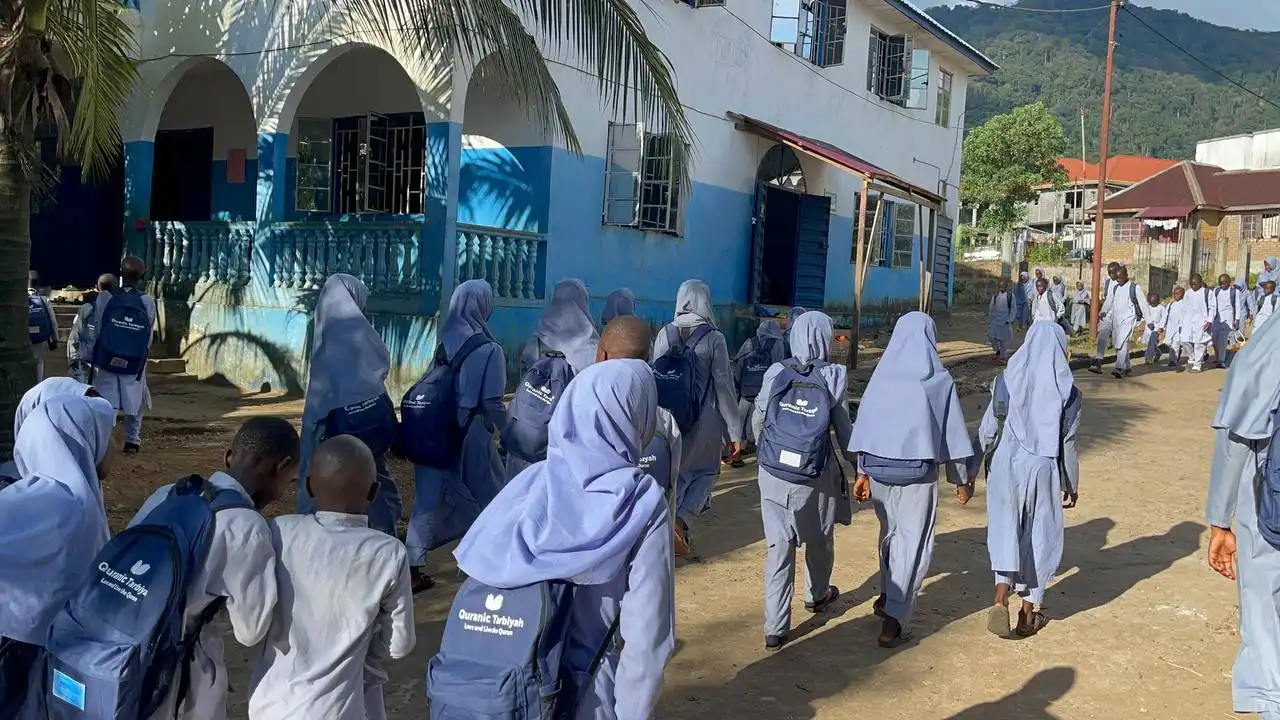
What began as a local initiative soon grew into a nationwide effort. Alhamdulillah, today, over 50,000 students, including 3,000 adults, are studying the Quranic Tarbiyah curriculum across Sierra Leone.
Teachers receive weekly training and tarbiyah sessions focused on Prophetic methods of teaching. Every madrasah is monitored weekly to ensure consistency and quality. Students are provided with bags, uniforms, books, and stationery — everything they need to learn with dignity and enthusiasm.
Spreading the Khayr Beyond Borders
The challenge of people leaving Islam is not limited to Sierra Leone. Recognising this, the team launched quranictarbiyah.com, making the curriculum available for free download worldwide, with physical copies offered at a small cost.
We pray that Allah ash‑Shakūr accepts this humble effort, blesses it, forgives our shortcomings, and makes it a means of uplifting our Ummah.