The news cycle in recent years will have left a believer aghast at the unending massacres, killings and atrocities inflicted upon this Ummah. Each calamity brings frustration, followed by a cycle of protests, khutbahs, articles, and lamentable discussions.
Important as these responses are, they are not sufficient on their own. Had they been enough, the Ummah would not remain trapped in recurring cycles of oppression. These repeated crises point to a deeper issue that requires long-term vision and strategic reform.
The Gradual Journey of Tarbiyah and Reform
The Qur’ān teaches us that true reform and victory is not achieved through a single effort or emotional reaction. It is a long and gradual journey requiring the preparation of ourselves and the next generation.
History repeatedly shows that victory is never a sudden miracle or a stroke of luck, but the result of a long spiritual, intellectual, and social preparation. Even the greatest moments of triumph were preceded by years, often decades, of inner reform i.e. tarbiyah (the nurturing of individuals). A concentrated effort must be directed toward this noble goal. Without it, the Ummah remains stagnant, trapped in cycles of grief and reaction.
With each new wound, our cries and pleas rise to Allah, our supplications intensify, and reminders echo from the pulpits calling for repentance and change. But once we’re out of the eye of the storm, the wound becomes part of the Ummah’s body and people grow accustomed to it until another calamity arrives.
True transformation begins with the revival of īmān within society: God-consciousness, compassion, modesty, cooperation in righteousness, selflessness, steadfast ṣabr, enjoining good, forbidding wrong, tawakkul, and a sense of responsibility toward the Ummah and humanity. At the same time, destructive traits such as self-admiration, selfishness, moral corruption, and attachment to worldly desires and prioritising nationalism, ethnicity, family loyalties, or political movements over the shared identity of the Ummah must be eliminated. These are the deeper causes of defeat, weakening the Ummah from within.
This transformation can only be achieved through sustained tarbiyah, carried out by those striving for Islam within their spheres of influence, preparing both themselves and the next generation for this long and gradual path of reform.
Comprehensive Tarbiyah
No matter how many lessons are delivered or articles written, they will not produce lasting benefit unless embedded within a comprehensive system of tarbiyah: a structured framework of development and reform. Such a system nurtures righteous believers who reform themselves and uplift others. Upon them rests the foundation of a righteous family, and upon that, a righteous society.
Thus, the starting point for lifting the calamities upon the Ummah lies in inner reform. Allah ﷻ says:
“Indeed, Allah will not change the condition of a people until they change what is within themselves” (13:11).
Unless this transformation occurs, trials will continue to descend. They are not lifted by duʿāʾ alone, nor by mere aid to the afflicted, despite their importance. Real transformation demands effort, sacrifice, and commitment.
The Prophetic Path of Tarbiyah
The transformation of the Ummah requires a sound and holistic tarbiyah of its people. True tarbiyah demands consistency in living Islām within an environment of companionship and nurturing: one that revives the spirit, refines understanding, directs effort, and inspires aspiration.
This was precisely the method of our beloved Prophet Muḥammad ﷺ in building the Ummah. Reflect on Allah’s words to him:
“Keep yourself patient with those who call upon their Lord in the morning and the evening, seeking His Face; and let not your eyes pass beyond them, desiring the adornment of worldly life…” (18:28).
The Messenger of Allah ﷺ nurtured his Companions, constantly guiding and developing them, both in Makkah and Madīnah. In Makkah, he gathered with them regularly in the house of al-Arqam ibn Abī al-Arqam near al-Ṣafā. In Madinah, his tarbiyah continued through the masjid and through his constant presence among them. Allah ﷻ describes this mission: “It is He who has sent among the unlettered a Messenger from themselves, reciting to them His verses, purifying them, and teaching them the Book and wisdom.” (62:2).
Learning From the Past
Our history provides many examples of a defeated Ummah rising again, stronger than before. We must look to these moments for guidance and seek to understand and relive the means through which Allah granted victory.
Ṣalāḥuddīn’s liberation of al-Quds is often remembered as a military triumph, but it was preceded by decades of spiritual and intellectual preparation. Most of his life was not spent on the battlefield, but on healing internal divisions, restoring unity, resolving divisions, and rebuilding a shared sense of purpose.
The road to Jerusalem was not only paved with battles against external enemies, but also with steadfastness in the face of betrayal and internal opposition. Yet Ṣalāḥuddīn (raḥimahullāh) understood that unity upon truth was a prerequisite for victory.
Before him, figures such as Nūruddīn Zengī revived religious life, established institutions of learning, and cultivated unity and purpose within society. Scholars like al-Ghazālī and al-Jīlānī emphasised sincerity, purification of the heart, and the alignment of knowledge with action. Thus, Ṣalāḥ ad-Dīn inherited not just an army, but a generation grounded in both spiritual and physical strength.
When people rose above petty disputes, prioritised the Hereafter over worldly gain, and united upon the truth of “Lā ilāha illa Allāh” in word and action, the extraordinary unfolded. In just ninety days, strongholds of oppression that had lasted ninety years began to collapse.
Similarly, the scattered Berber tribes of the Sahara, divided by internal rivalries and weakened faith, underwent transformational tarbiyah under the guidance of ʿAbdullah ibn Yasin. With a focus on īmān and character, these tribes were united into the Murābiṭūn, who later ruled large parts of North Africa.
A Mirror for Our Time
Today, we face the same reality. Many wait for a leader to rise and transform the Ummah, yet we have not prepared ourselves for the weight of that path. The issue is not a lack of numbers or resources, but a lack of sincerity, sacrifice, and unity upon the truth.
When hearts become consumed with internal conflicts, divisions, and worldly pursuits, the Ummah loses sight of its mission.
Our history teaches us that however bleak the condition of the Ummah may seem, it is neither unique nor irredeemable. Through a sustained and committed return to tarbiyah, the Ummah can rise once again.The question is not whether victory will come, but whether we are prepared to become the generation that builds rather than destroys, unites rather than divides, and lives by “Lā ilāha illa Allāh” in truth and action, so that the promise of Allah may be realised.
Reflect
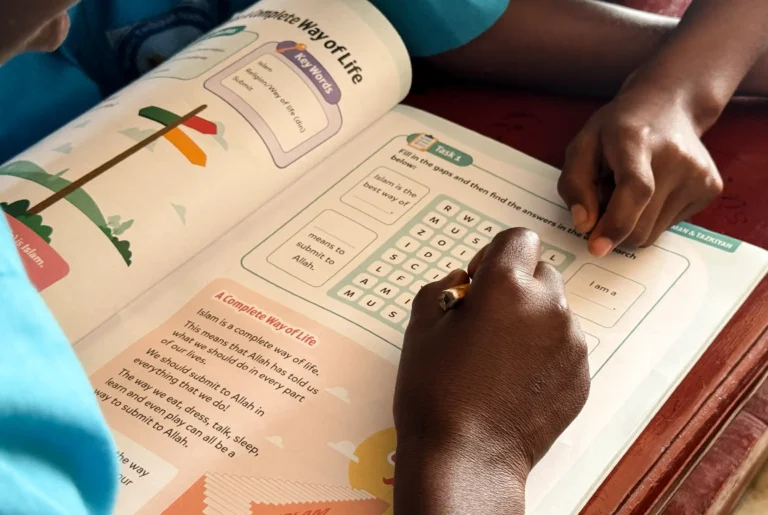
- What intentions do you have when teaching your students and children? How do you hope they will grow into the next generation of strong believers and changemakers?
- What changes can you make to what you teach — and to the way you teach — in order to nurture the qualities highlighted in this article?
- The Prophet ﷺ nurtured his Companions through companionship, guidance, and consistent engagement. How can we create similar environments of mentorship, belonging, and spiritual growth in our homes, schools, masājid, and communities?