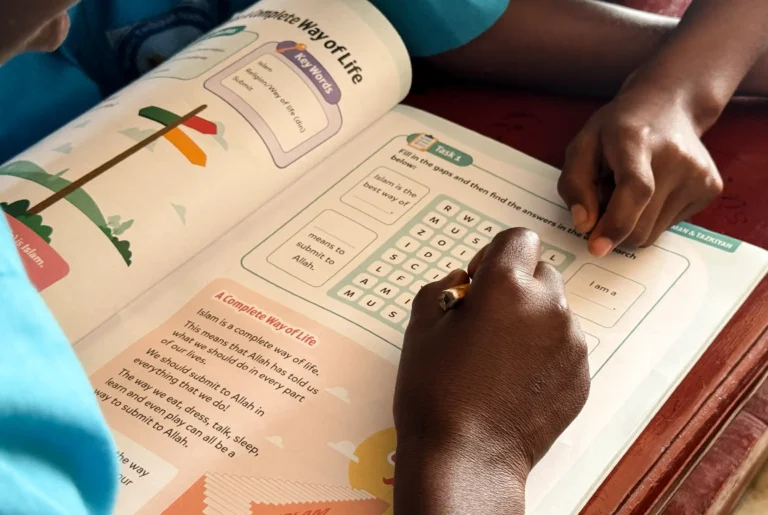
“Iqra!” The very first word of Divine Revelation to Prophet Muhammad ﷺ was the command to read. The believers took this command to heart… and thus was born the drive to read, to learn, to reflect, and to imagine. This spirit of seeking knowledge helped shape an Islamic civilization grounded in scholarship, knowledge and innovation; from famed centres of learning and libraries established by Muslim scholars and sultans, to rich traditions of poetry, storytelling and literature that continue to suffuse Muslim cultures around the world.1
Today, however, many Muslim families have lost connection with literature. While academic achievement is highly valued, there is often a strong emphasis on STEM subjects, at the expense of what we tend to dismiss as “liberal arts.” Yet literature in all its forms, from fiction and non-fiction to memoir, biography, and poetry, offers innumerable unique benefits:
- Develops language and communication skills through exposure to rich vocabulary, sentence structures and literary techniques
- Supports cognitive development including reasoning, comprehension, and academic attainment.
- Builds emotional intelligence, creativity, and critical thinking by exposing readers to new ideas and perspectives.
- Provides a healthy alternative to screen-based entertainment, keeping children away from devices that damage their ability to focus and maintain attention spans.
Reading Shapes Identity and Worldview
As Muslims, we should ensure that our children have regular and consistent access to books written by Muslim authors that reflect Islamic values and experiences. Like all forms of media, literature plays a role in shaping how children understand the world and how they see themselves. Representation contributes positively to a child’s developing sense of identity and belonging.
In a time of pervasive Islamophobia and increasing pressure to adopt un-Islamic values, Muslim children are especially vulnerable to feeling isolated, ashamed of their dīn, or developing low self-esteem. Positive representation via Muslim characters and Islamic values helps children feel confident in their Islamic identity and proud and secure in their dīn.
Alḥamdulillah, the range of high-quality Muslim children’s literature has grown significantly in recent years, offering many opportunities for children to enjoy stories that genuinely reflect their faith and values.
Raising Lifelong Readers
Reading requires parents to facilitate access. This may include regular visits to the public library (which is free and often allows non-listed books to be ordered in for free), buying books to build a home library, and modelling reading habits at home. Every penny, every step, every effort will be your ṣadaqah jāriyah inshāAllah.
Parents should also remain actively involved in guiding their children’s reading journey, particularly as they grow older and begin exploring books with more complex themes. Being aware of what children are reading, having open and healthy discussions about difficult but relevant topics, and maintaining a safe environment where children feel comfortable asking questions can help ensure that reading continues to strengthen both character development and Islamic identity.
We also recommend Madrasahs and Islamic schools facilitate reading by ordering books for the children, building a library where possible, and organising reading competitions and book clubs.
The Ummah Readers Challenge reading list includes carefully selected fiction and non-fiction works by Muslim authors for Muslim children. We pray that this benefits you and your families and encourages a lifelong love of beneficial reading, inshāAllah! Happy Reading!
The Ummah Readers Challenge
Parents and teachers can use the Ummah Readers Challenge book list to set a year-long reading challenge.
This challenge encourages children to discover the joy of reading, learn about inspiring people and places, and grow into strong, confident Muslims.
- Introduce the challenge and explain the different award levels at the beginning of the year.
- Ensure children have access to the books throughout the year. This can be done in several ways:
- Parents or the school/madrasah purchase a set of books for each child.
- Children borrow the books from the local library. If a title is unavailable, parents can ask whether the library is able to obtain it. Many libraries are able to do this upon request.
- Schools or madrasahs purchase one set of books for each year group, allowing children to borrow them in rotation throughout the year.
- Print a copy of My Ummah Readers Passport for each child. Ask children to track their reading throughout the year. If printing the entire document is not possible, simply print My Ummah Readers Log.
- Encourage and motivate children regularly, and carry out a mid-year or end-of-term progress check.
- Celebrate children’s achievements at the end of the year. Present a certificate to every child who reaches one of the three challenge levels.
Download the Book Lists, Reading Passport, Readers Log, Bookmark and the Certificates
References:
1 Abdullah, A. (2024). On the love of books in the Islamic tradition. RZS-CASIS, Universiti Teknologi Malaysia.