
Please note that all orders placed between Monday 26 October and Tuesday 3 November will be dispatched from Wednesday 4 November onwards.
Cart
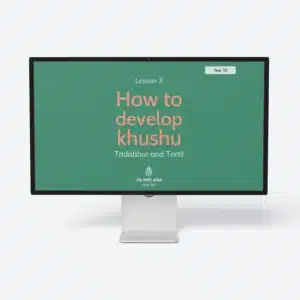
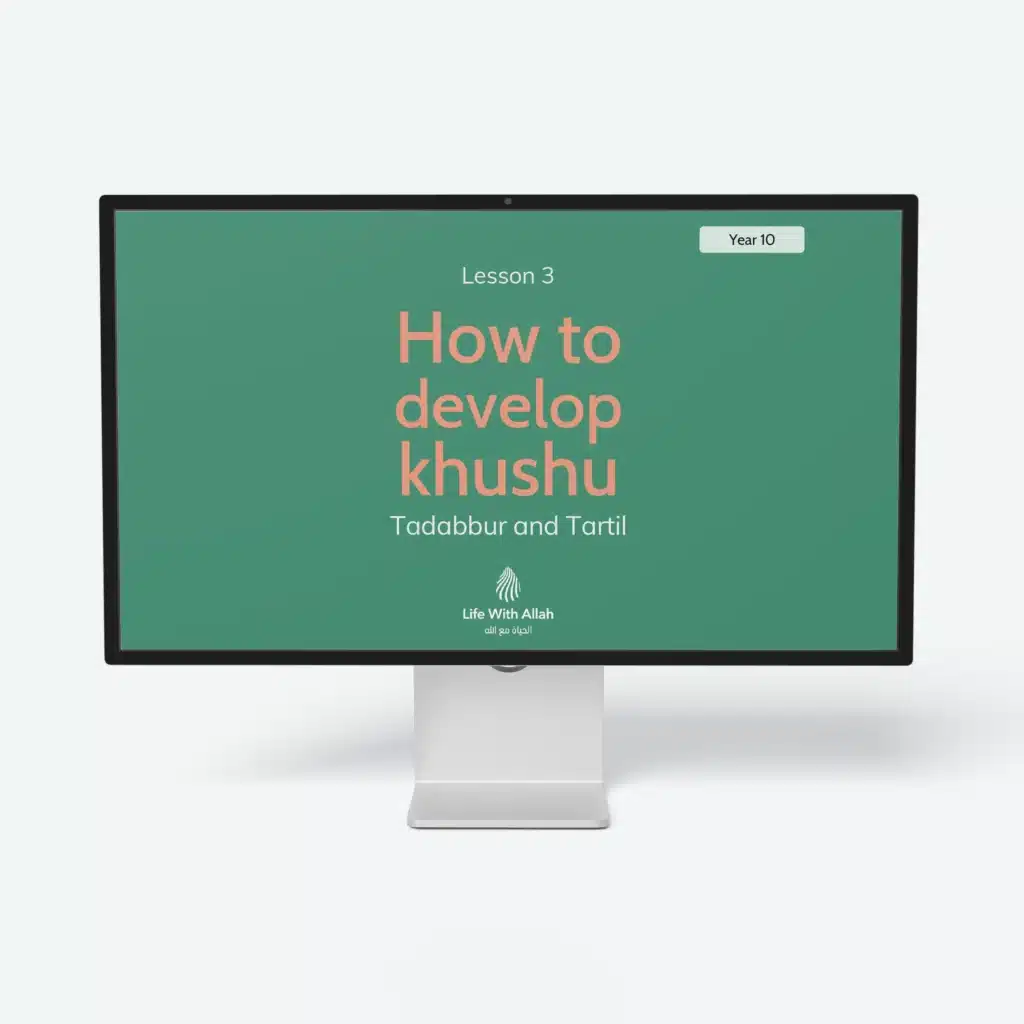
Y10 Lesson 3 Tadabbur and Tartil (How to Develop Khushu)
Y10-Lesson-3-Tadabbur-and-Tartil-How-to-Develop-Khushu

Qur’an & TadabburPresentationAges 14+

Y10 Lesson 3 Tadabbur and Tartil (How to Develop Khushu)

4.02 reviews

A lesson on developing khushūʿ through Qur'anic recitation, covering tartīl, taghannī, tadabbur with five practical steps, and adhkār of rukūʿ from Muslim.

FreeDigital presentation
Download the free presentation

Download · No account needed

In this presentation

Learners will:

  • Linkthe Qur'an and khushuʿ
  • Explorehow to recite the Qur'an in salah
  • Identifyhow to do tadabbur
The slides
About this lesson

What’s in it

Y10 Lesson 3 Tadabbur and Tartil (How to Develop Khushu) is a free Qur’an & Tadabbur presentation for ages 14+. Learners will link the Qur'an and khushuʿ. Free to download, no account needed.

A lesson on developing khushūʿ through Qur’anic recitation, covering tartīl, taghannī, tadabbur, and adhkār of rukūʿ.

  • The connection between Qur’an and khushūʿ: A listening exercise on recitation opens the lesson before five terms are introduced tilāwah, tartīl, tajwīd, tadabbur, and taghannī. Khabbāb رضي الله عنه  is quoted: no act of worship brings a person closer to Allah than His own words.
  • Tartīl: Qur’an 73:4 is quoted on reciting slowly and calmly, making each word distinct. The account of ʿAbdullāh b. Masʿūd رضي الله عنه follows rebuking a man who recited the entire mufaṣṣal in one rakʿah with his reminder that the Qur’an benefits only when it enters the heart and takes root there.
  • Taghannī: Two Hadith sit alongside each other from Abū Dāwūd, that whoever does not recite melodiously is not of us, and from Ibn Mājah, that the best reciter is the one whose voice makes you think he fears Allah.
  • Tadabbur and how to practise it: Five steps are offered thinking of Who is speaking, personalising the address, visualising, feeling the emotion and repeating the āyah, and interacting with the āyāt. Al-Ghazālī is quoted: ” Everything that distracts from understanding one’s recitation is a whispering from Shayṭān”.
  • Adhkār of rukūʿ: Three adhkār are added to the adhkār bank, all from Muslim praising Allah, asking for forgiveness, and affirming that there is no god worthy of worship except Him.

Reviews
4.0
4.0 out of 5 stars

From 2 ratings.

“Interesting”

4 out of 5 starsJamal Muhammad Mutawakkil· October 2026
“May Allah grant goodness to the author and I think it’s absolutely amazing to be able to access this masterpiece”

4 out of 5 starsAsmahan Saidou· August 2026
Questions

Good to know

How do I open the zip file?

The download is a zip file, which holds several files in one. On Windows, right-click it and choose Extract All, then open the new folder. On a Mac, double-click it and a folder appears next to it. On iPhone or iPad, tap it in the Files app. On Android, open it in Files by Google and tap Extract. You can then open or print the files inside as normal.

Do I need an account to download?

No. The PDF opens straight away. Print it at home or in school.

Can I print and photocopy the resources from this website?

Yes, you may photocopy or print the resources from this website for non-profit and educational uses only, as long as the original work is cited and not distorted. However, all resources and books are copyrighted, and you may not monetise any of them.